

How to Integrate a Modern Victorian Living Room into Your Existing House

Victorian style carries a timeless charm, blending ornate details with classic sophistication. When combined with modern design, it creates a living room that feels luxurious yet comfortable. Integrating a modern Victorian living room into your current home requires thought, balance, and creativity. Using living room designs that mix Victorian and contemporary elements allows your space to shine while staying functional.
Key Takeaways
- Blend Victorian details with modern simplicity to avoid clutter.
- Use a neutral color base with pops of rich tones for a balanced palette.
- Mix textures like velvet, linen, and wood to add warmth and depth.
- Highlight a statement piece to anchor the room’s design.
- Combine old and new lighting for functional and stylish illumination.
- Prioritize furniture placement and keep the room comfortable.
- Add small décor accents to tie the Victorian and modern elements together.
Balance Victorian Elegance with Modern Simplicity
Victorian interiors often feature intricate moldings, decorative trims, and bold patterns. Modern design focuses on clean lines, minimal clutter, and neutral tones. To integrate these two styles, focus on highlighting Victorian details without overcrowding the space.
- Walls and moldings: Retain or add subtle crown moldings and wainscoting. Paint them in soft shades like ivory, muted gray, or pale blue to keep the modern feel.
- Flooring: Wooden floors with a rich finish suit Victorian elegance, while modern rugs with geometric patterns add a contemporary twist.
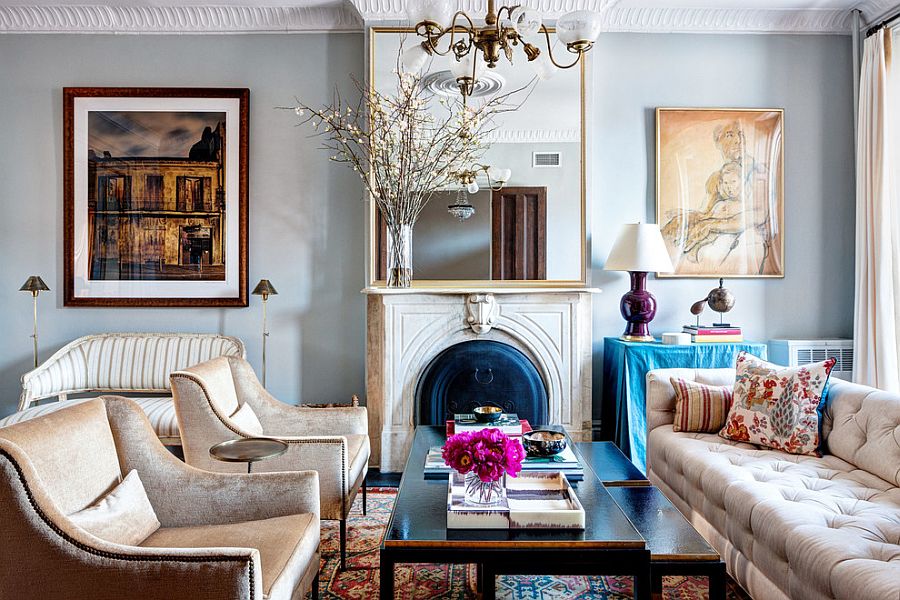
- Furniture: Choose Victorian-inspired furniture like tufted sofas or armchairs, but pick pieces with sleeker legs and simpler shapes.
Select a Cohesive Color Palette
Colors make a strong statement in any living room. Victorian style often uses jewel tones and deep hues, while modern design favors lighter shades. Combine the two to create a cohesive look.
- Start with a neutral base, such as soft gray, beige, or cream.
- Add Victorian pops of color with accessories like velvet cushions, curtains, or an accent chair.
- Use metallics, such as brass or gold, in small doses on lighting fixtures, mirror frames, or side tables to enhance elegance.
Focus on Furniture Placement
Modern Victorian living rooms thrive when space feels open and functional. Avoid cluttering the room with excessive pieces. Prioritize key furniture items that combine style and practicality.
- Sofas and seating: Position a tufted Victorian sofa as the centerpiece. Pair it with modern chairs that have clean lines.
- Coffee tables: Opt for a glass or marble table with ornate legs. It adds a Victorian touch without overwhelming the room.
- Storage units: Victorian homes often have heavy wooden cabinets. Modern equivalents with sleek finishes maintain the theme while keeping the space airy.
Lighting that Blends Old and New
Lighting sets the tone for any living space. Victorian homes typically feature chandeliers, sconces, and candle-style lamps. Modern lighting offers minimalistic options with sleek metal finishes or unique geometric shapes. Combine the two for dramatic and functional illumination.
- Hang a chandelier over the central seating area, preferably in a simpler design to match modern aesthetics.
- Add wall sconces with metallic finishes along accent walls.
- Use modern floor lamps to brighten corners without taking attention away from Victorian elements.
Incorporate Textures and Fabrics
Textures bring depth and warmth to a living room. Victorian spaces rely on rich fabrics like velvet, silk, and brocade. Modern design favors linen, cotton, and leather. Combining both creates a tactile and inviting atmosphere.
- Curtains and drapes: Choose velvet drapes in jewel tones or muted colors. Keep them straight and tailored for a modern touch.
- Cushions and throws: Mix patterned Victorian cushions with plain modern throws for contrast.
- Rugs: Layer rugs with Victorian motifs on top of plain, neutral carpets to highlight texture without clutter.
Add Art and Decorative Pieces
Art and decor bring personality to your living room. Victorian homes often feature paintings, sculptures, and ornate mirrors. Modern spaces use abstract art, minimal frames, and sculptural accents. Combine both styles carefully.
- Hang a statement Victorian mirror above the fireplace.
- Place modern abstract paintings on side walls to break monotony.
- Include small decorative accents like brass candle holders, ceramic vases, or contemporary sculptures on shelves and tables.
Keep the Space Functional
A living room should remain comfortable and usable. Modern Victorian design balances aesthetics with functionality. Avoid overcrowding furniture or accessories.
- Maintain open walkways for movement.
- Limit furniture pieces to essentials: seating, tables, and storage.
- Integrate technology subtly, such as hiding cords or using vintage-style covers for speakers and media units.
Personalize with a Statement Piece
Every modern Victorian living room benefits from one bold statement item. It could be an ornate fireplace, a tufted velvet sofa, or a large gilded mirror. This piece anchors the design, drawing attention without overpowering the room. Studio20 Architects often recommends selecting a focal point to elevate living room designs.
- Select a color or finish that contrasts yet complements the rest of the room.
- Place it centrally so it naturally becomes the focal point.
- Pair it with simpler items around the room to maintain balance.
Small Touches That Make a Big Difference
Tiny details give a modern Victorian living room a polished feel. Accessories, textures, and lighting accents elevate the design without making it feel dated.
- Swap doorknobs and drawer pulls with antique-inspired metallic finishes.
- Add Victorian-style trim around modern shelves or cabinets.
- Incorporate subtle patterns in pillows or wallpaper that hint at Victorian designs without overwhelming the space.
FAQs
Can I integrate Victorian furniture into a modern open-plan house?
Yes. Choose key Victorian pieces, such as a tufted sofa or decorative armchair, and position them strategically. Pair them with modern furniture to maintain flow and openness.
What colors work best for a modern Victorian living room?
Soft neutrals like cream, beige, or gray work as the base. Add jewel tones like emerald, navy, or burgundy through furniture, curtains, or cushions. Metallic accents in gold or brass enhance elegance.
Do I need a chandelier to create a Victorian vibe?
Not necessarily. While chandeliers add character, modern lighting can complement Victorian décor. Choose a statement light fixture that balances ornate and sleek elements.
How can I mix textures without making the room feel busy?
Combine heavy fabrics like velvet with lighter ones like linen or cotton. Use rugs, cushions, and throws strategically, limiting bold patterns to one or two elements in the room.
Can modern technology fit into a Victorian living room?
Absolutely. Hide cords, select furniture with storage for media devices, and use vintage-inspired covers for speakers or TVs. Modern technology can blend seamlessly without disrupting the aesthetic.